
Grinding Wheel Safety Rules Every Operator Should Know
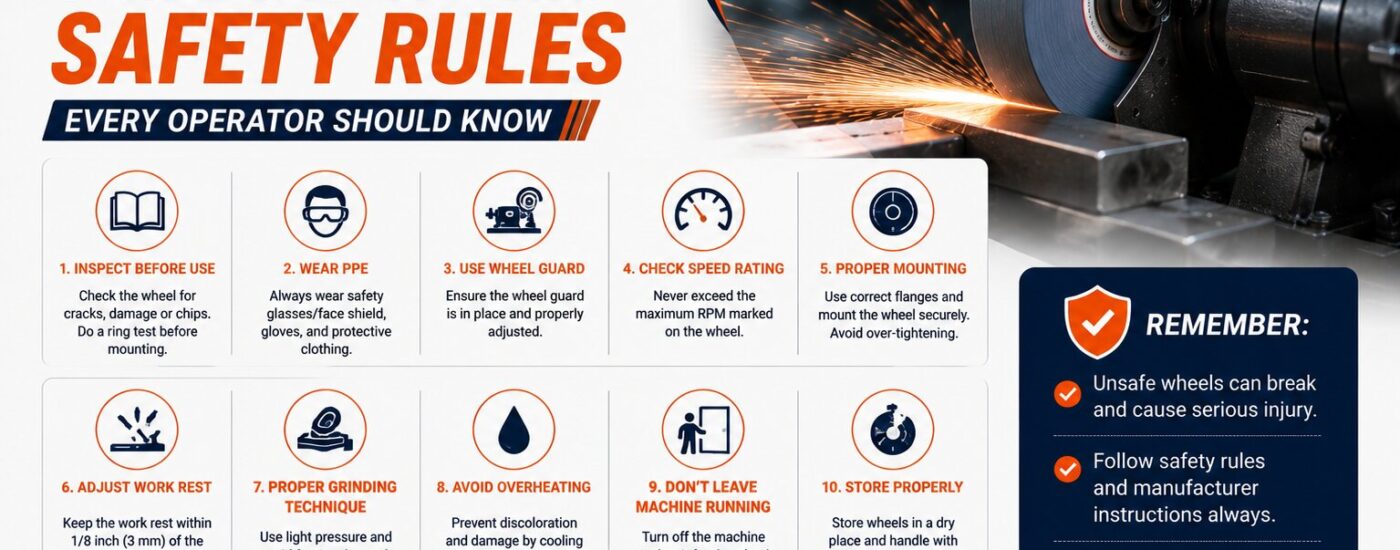
Grinding wheels rotate at high velocity and may shatter with out caution if they’re damaged, mismatched, or misused. A single disregarded protection step can cause critical injury from flying fragments, kickback, or wheel burst. This manual covers the middle safety rules each operator should follow, from pre-operation tests to correct PPE, so shop floors live coincidence-loose and compliant with popular protection exercise.
The Core Grinding Wheel Safety Rule
Always inspect the wheel for cracks, match its rated RPM to the machine, keep the guard and tool rest properly adjusted, and wear eye and face protection before starting. Most grinding accidents happen when one of these four checks is skipped.
Why Grinding Wheel Safety Matters
A grinding wheel is essentially a quick-spinning abrasive disc, frequently accomplishing several thousand RPM. If it’s miles cracked, overloaded, or run past its rated velocity, it may burst violently, sending fragments outward with sufficient pressure to motive excessive cuts, eye harm, or worse. Because the risk is largely invisible until failure happens, protection has to be procedural and constant, now not left to operator judgment on my own.
Pre-Operation Inspection: The Ring Test
Before mounting any wheel, carry out a visual check for cracks, chips, or moisture damage, then a ring check: tap the wheel lightly with a non-metallic item at the same time as it hangs freely. A clean, metallic ring shows the wheel is sound; a dull thud alerts a crack, and the wheel ought to be discarded without delay.
Correct Mounting and Guarding
- Use flanges of equal, correct diameter on both sides of the wheel
- Never overtighten the mounting nut, which can stress the wheel
- Keep the wheel guard installed at all times to contain fragments
- Adjust the tool rest to within 3 mm of the wheel face
Matching Wheel Speed to Machine Speed
Every wheel is stamped with a maximum safe operating speed (RPM). Running a wheel on a machine that exceeds this rating is one of the leading causes of wheel burst. Operators should always confirm the machine’s spindle speed against the wheel’s rated maximum before starting any job, especially after swapping wheels.
Personal Protective Equipment (PPE)
- Safety goggles or a full face shield at all times
- Cut-resistant gloves when handling wheels, not during grinding itself
- Hearing protection for extended grinding sessions
- Avoid loose clothing or dangling jewelry near the wheel
Safe vs Unsafe Grinding Practices
The table below compares safe habits against common unsafe shortcuts:
| Safety Aspect | Safe Practice | Unsafe Practice (Avoid) |
| Wheel Inspection | Ring test before every mount; check for cracks | Mounting a wheel without inspecting it |
| Speed Rating | Match wheel RPM to machine spindle speed | Running a wheel above its rated RPM |
| Guarding | Keep wheel guard installed and adjusted | Grinding with the guard removed |
| PPE | Safety goggles, face shield, gloves as needed | Grinding without eye or face protection |
| Tool Rest | Set rest within 3 mm of the wheel face | Grinding with a wide or missing gap |
| Start-Up Procedure | Stand aside and let wheel run 1 minute before use | Applying workpiece immediately at start-up |
| Wheel Storage | Store flat or upright in a dry rack | Stacking wheels loosely or storing them damp |
Common Mistakes That Lead to Accidents
Most grinding injuries trace back to a handful of repeated mistakes: skipping the ring test, forcing a wheel onto a mismatched spindle, removing the guard for easier access, or applying excessive pressure that causes the workpiece to grab and kick back. Training operators to recognize these shortcuts, and building inspection into the daily routine, prevents the majority of incidents.
Wheel Storage and Handling
Grinding wheels should be stored flat on shelves or upright in racks designed for their shape, kept dry, and away from temperature extremes that can weaken the bond. Wheels should never be dropped, dragged across the floor, or stacked without separation, since even minor impact damage can cause failure later during use.
Conclusion
Grinding wheel safety comes right down to steady behavior: look at earlier than mounting, healthy speed rankings, hold guards and rests nicely set, and wear the right PPE whenever. These policies take simplest minutes to observe however save you the bulk of grinding-related accidents. Building them into a preferred tick list keeps operators included and equipment running reliably.
Frequently Asked Questions
How often should a grinding wheel be inspected?
Every time before mounting, and again before each use if the wheel has been sitting unused or was dropped.
What happens if a wheel is run above its rated speed?
It significantly increases the risk of the wheel bursting during operation, which can cause serious injury.
Is a wheel guard ever safe to remove?
No. The guard should remain installed and properly adjusted at all times during grinding operations.
