
Diamond Dresser Specification: A Complete Guide for Machinists
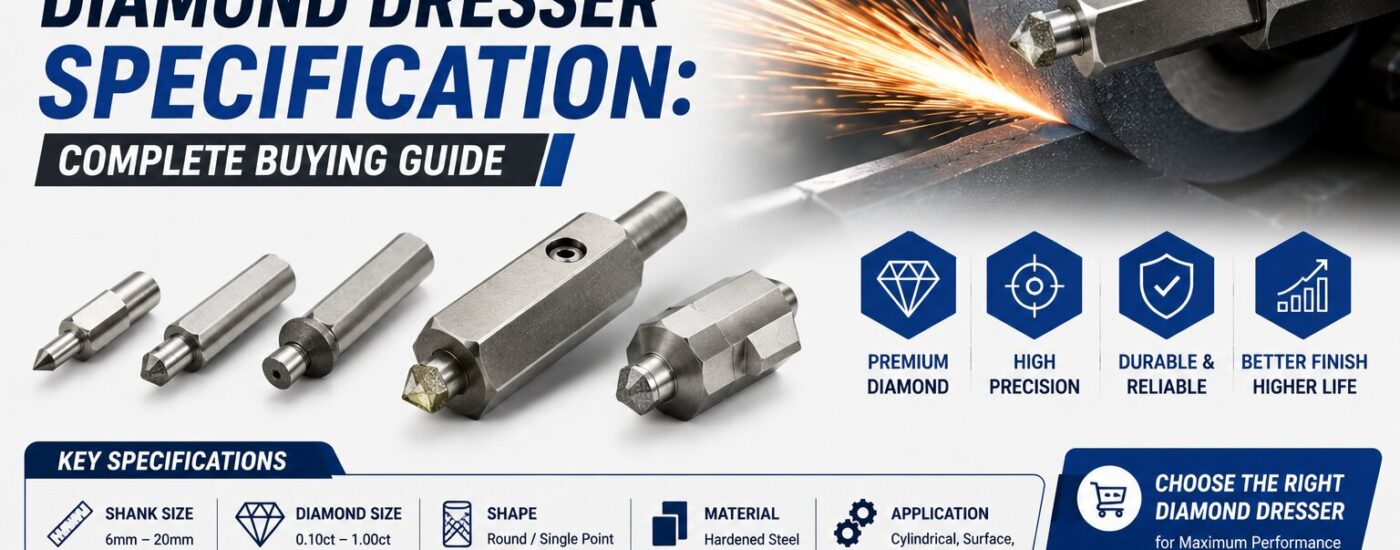
It is entirely dependent on the diamond dresser used to shape the grinding wheel’s surface that allows it to cut accurately. Bad wheel profiles, chatter, and inconsistent finishes result from wrong specifications, shank diameters, and point angles. There are a variety of diamond dresser types available, and this guide explains how to match a dresser to your grinding application.
Quick Answer: What Defines a Diamond Dresser Specification?
A diamond dresser specification covers diamond type (natural or synthetic), carat weight, point angle, shank diameter and length, and mounting style. These factors together determine how precisely the tool can true and dress a grinding wheel, and how long it will last under repeated use.
What Is a Diamond Dresser?
A diamond dresser is a precision tool used to true, shape, and smooth the reducing face of a grinding wheel. Over time, a wheel’s abrasive surface will become glazed or loses its profile, reducing cutting performance. The diamond cloth cabinet restores sharpness and geometry by using casting off a skinny layer of the wheel’s bonding fabric, exposing sparkling abrasive grains.
Key Specifications to Check Before Buying
- Diamond type: natural diamonds offer higher wear resistance; synthetic diamonds cost less and suit lighter duty work
- Carat weight: heavier carat ratings handle larger wheels and rougher dressing cycles
- Shank diameter and length: must match the toolholder or dressing attachment on the machine
- Point angle: typically 60° or 90°, affecting how fine or aggressive the dressing cut is
- Mounting style: straight shank, offset shank, or threaded, depending on the holder design
Types of Diamond Dressers
A single-point dresser uses one diamond set at a precise angle to grind forms and profiles. Dressers with multiple points or clusters spread smaller diamonds across a flat surface, making them ideal for faster, general-purpose dressing. A rotary diamond dresser, often shaped like a disc or a roller, is used on CNC and production grinders for high-volume, repeatable dressing.
Diamond Dresser Specification Comparison
The table below compares the two most common dresser types by specification:
| Specification | Single-Point Dresser | Multi-Point / Cluster Dresser |
| Diamond Layout | One large diamond set at the tip | Multiple small diamonds spread across the face |
| Typical Carat Size | 0.25 to 2.0 carat | 0.05 to 0.25 carat per stone |
| Shank Diameter | 6 mm to 12 mm standard | 10 mm to 20 mm standard |
| Point Angle | Commonly 60° or 90° | Flat or slightly domed face |
| Best Application | Precision form dressing, fine finishes | General-purpose, faster stock removal |
| Tool Life | Longer with proper rotation of the tip | Shorter per stone, but more cutting points |
How to Choose the Right Specification for Your Application
Match the dresser’s carat weight and shank diameter for your grinding wheel’s diameter and hardness grade, larger wheels typically want a higher carat rating to get dressed efficiently without immoderate wear. For exceptional surface finishes on tool and cutter grinding, a unmarried-factor cloth cabinet with a 60° angle is regular. For hard or excessive-volume dressing on production strains, a multi-point or rotary wardrobe reduces cycle time.
Mounting Angle and Rotation Guidelines
Diamond dresser should be mounted at a slight angle, usually 10 to 15 degrees, and offset from the wheel’s centerline to prevent the diamond from digging in. Rotating a single-point dresser periodically in its holder distributes wear evenly across the stone, extending usable life significantly compared to leaving it fixed in one position.
Sourcing a Reliable Diamond Dresser
Specification on paper only matters if the diamond setting and shank machining are held to tight tolerances in manufacturing. Shops that experience premature diamond pull-out or inconsistent dressing usually trace it back to inconsistent tool quality rather than a wrong specification choice. Vermaent’s range of diamond dressing tools is built around this principle, with diamonds set and shanks ground to consistent tolerances across single-point, multi-point, and rotary options, which is worth checking when specification alone isn’t solving a dressing accuracy problem.
Conclusion
Getting diamond dresser specification right, carat weight, shank length, point perspective, and kind, at once affects wheel accuracy, floor end, and device life. Match the cloth wardrobe in your wheel length and alertness, comply with correct mounting angle and rotation practice, and specification stops being a guessing game and turns into a trustworthy technical fit.
Frequently Asked Questions
What carat size diamond dresser do I need?
It depends on wheel diameter and hardness; larger, harder wheels generally need a higher carat rating, often 0.5 carat or above.
How often should a diamond dresser be rotated?
Rotate a single-point dresser every few dressing cycles to spread wear evenly and extend its usable life.
Is natural or synthetic diamond better for dressing?
Natural diamond generally offers longer life and better wear resistance, while synthetic diamond is a cost-effective choice for lighter, less frequent dressing work.
